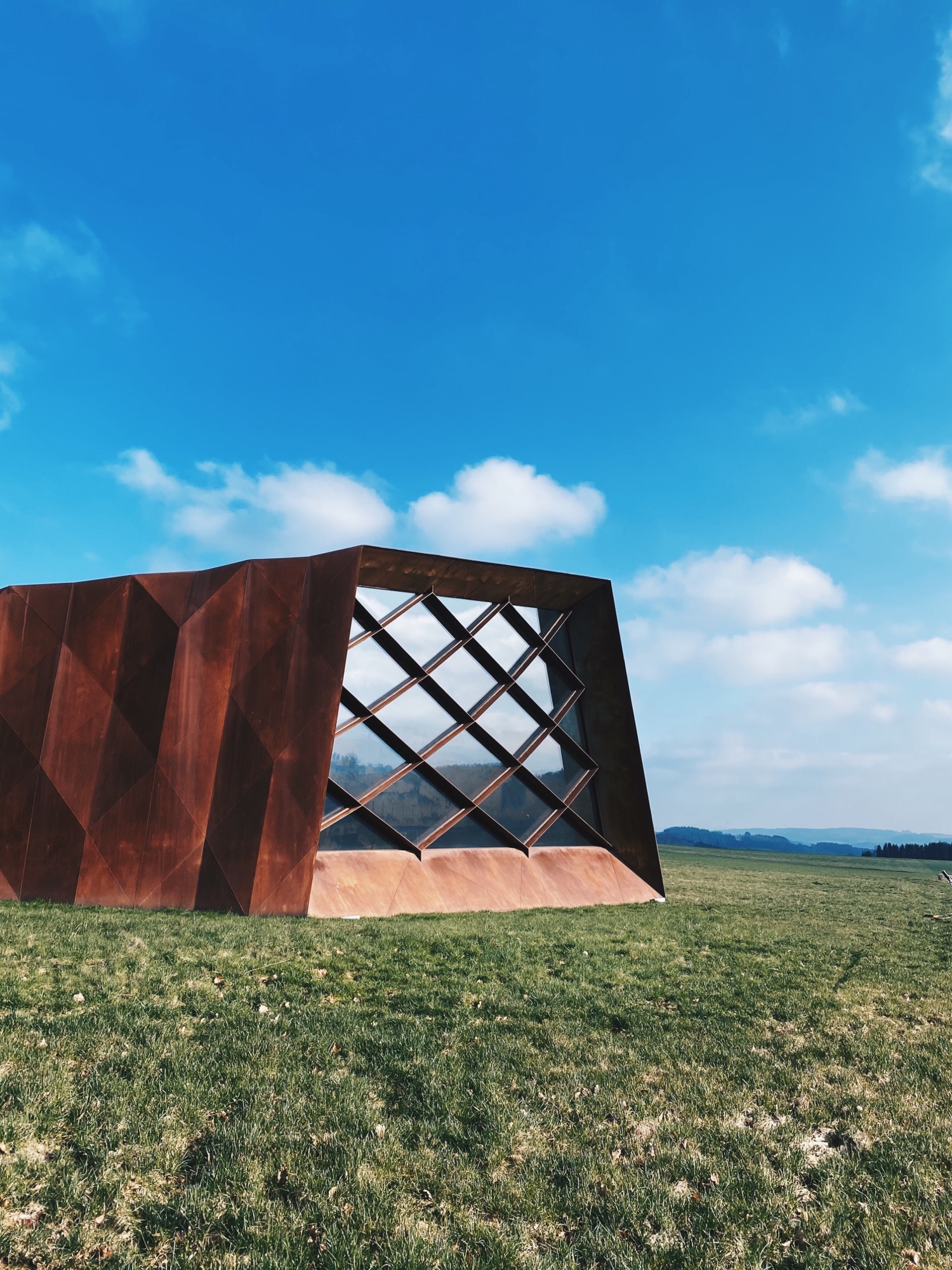
In March I visited the KZ Hinzert concentration camp (the “KZ” stands for Konzentrationslager, the German word for Nazi concentration camps from 1933-1945) near Trier, Germany, located close to the borders of Luxembourg and France. Operated from 1939-1945, a memorial was opened here in 2005. I first discovered KZ Hinzert when I toured the absolutely incredible Topography of Terror museum and archive in Berlin. Pouring over a map of concentration camps in Germany, I noticed a small marker close to where we currently live (about an hour drive away).
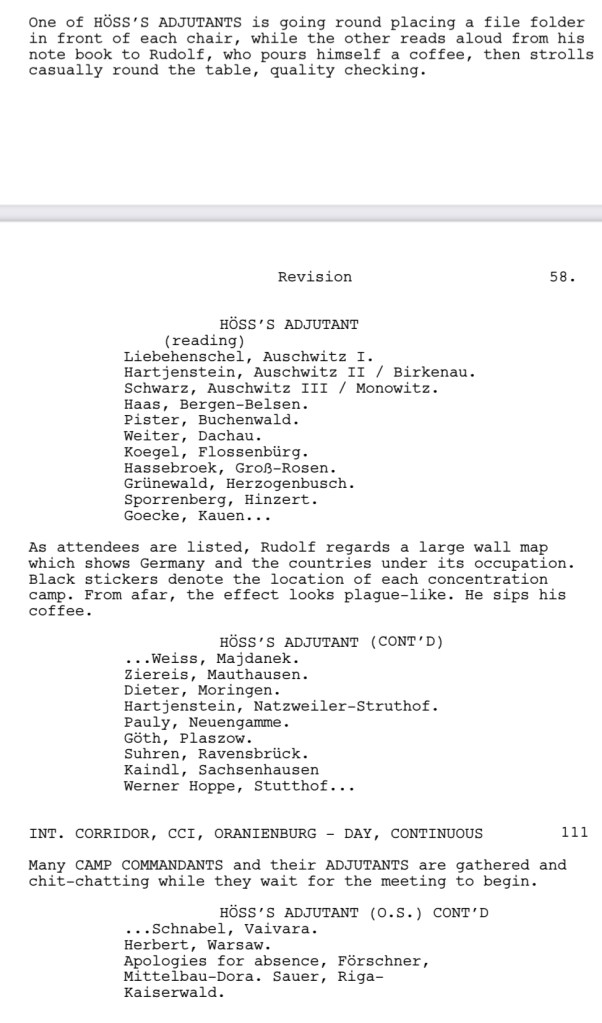
A few weeks after visiting the memorial site, I watched the haunting Zone of Interest (2023) and found myself absolutely unnerved by so many aspects of the film (the sound! the dialogue! the wide shots!). But one of the most jarring was the mention of Hinzert among the list of concentration camps overseen by Rudolf Höss, the SS commander that expanded the murder capabilities of Auschwitz, approving the installation of a new gas chamber and crematorium system, along with the systemic mass deportation of over 700,000 Jewish people from Hungary into the death and labor camps established by the Nazis in Poland.
This Post
Similarly to questions raised by activists on colonial photography — leading to an exhibit in Berlin’s Humboldt Museum (highly recommend a tour with Dekolonial ) — this post will not contain any photos of the victims of violence and control at KZ Hinzert. They did not have any say or agency when the perpetrators of crimes against them took photographs of forced labor, whether it be on plantations (as is in the German colonial context) or in extermination camps (imprisoned people at the control of the Nazis in power). What I find more useful — and similarly to how SS members are portrayed in Zone of Interest — is how the perpetrators photograph themselves implementing power, control, and war crimes, while enjoying the mundane activities of the every day — sipping coffee, reading a book, playing with a pet. Cameras can be just another weapon, another tool of oppression.
“The pictures mirror and result from a discrepancy of knowledge between the photographer and the photographed, which was also essential to the SS’ organisation of mass murder. Disentangling the circumstances of these pictures demonstrates most poignantly why we must move beyond the notion of visible, physical violence in order to address the brutality condensed in these pictures.”
Koppermann, Ulrike. 2019. “Challenging the Perpetrators’ Narrative: A Critical Reading of the Photo Album ‘Resettlement of the Jews from Hungary.’” Journal of Perpetrator Research 2:2. 101-129. Available here.
Particularly in the context of the Holocaust, photographs helped share the atrocities of the camps and the genocide of communities by the Nazis. In many ways, this evidence was used to convince that the violence was real, that murder and brutality took place. However, for me — especially as a person who utilizes photos to share — this is not the method I choose to tell the story of KZ Hinzert. Visually documenting war crimes is an important aspect, but one often abused, whether intentionally or not. Providing context and agency to this medium is an enormous undertaking and a growing field within archives that seeks to center the stories of those in the photos, returning their power back to them.
This post contains references to the Holocaust, forced labor, and executions. Please read with care ❤
KZ Hinzert
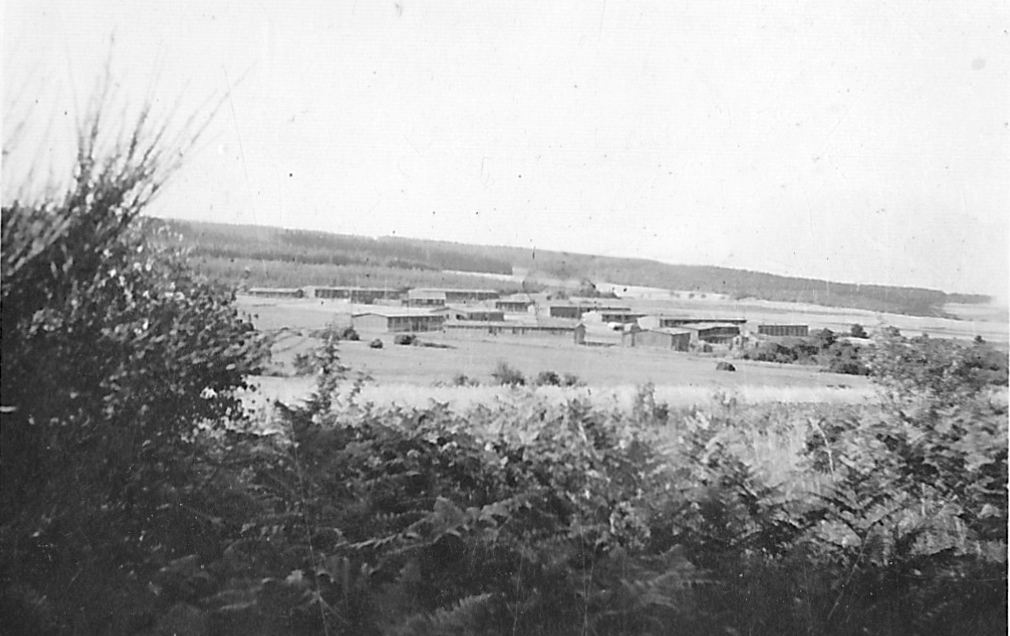
Source: Frank Falla Archive and the Topography of Terror Foundation
Originally established as a “police detention and education camp” in October 1939, “work-shy” people were sent to KZ Hinzert as a part of “rehabilitation” and “disciplinary treatment”. Those forced to work here (on the autobahn of the Reich and the Westwall) were not only German Nationals deemed as “delinquents” by the Nazi government, but also citizens from occupied countries. An estimated 13,600 people transitioned through the camp during its operation.
The space transitioned to a concentration camp at the beginning of WWII, with the first commander of the SS camp, Hermann Pister, appointed in 1939 and official designation named in 1940. Political prisoners of German, Soviet, and Polish descent were forcibly detained here, as well as resistance fighters from France, Belgium, the Netherlands, and Luxembourg. Following the passing of the “Nacht-und-Nebel” (“Night and Fog”) decree on December 7th, 1941, more than 2,000 French, Belgian, and Dutch members of resistance groups were deported to KZ Hinzert during May 1942 – October 1943. Imprisoned Polish men convicted of “forbidden relations” with “imperial” German women were also detained here until they could be reviewed and approved for their ability to “become German.” Nearly 14,000 people (ages 13-80) were forcibly detained at KZ Hinzert before the camp was evacuated to Buchenwald in 1945.
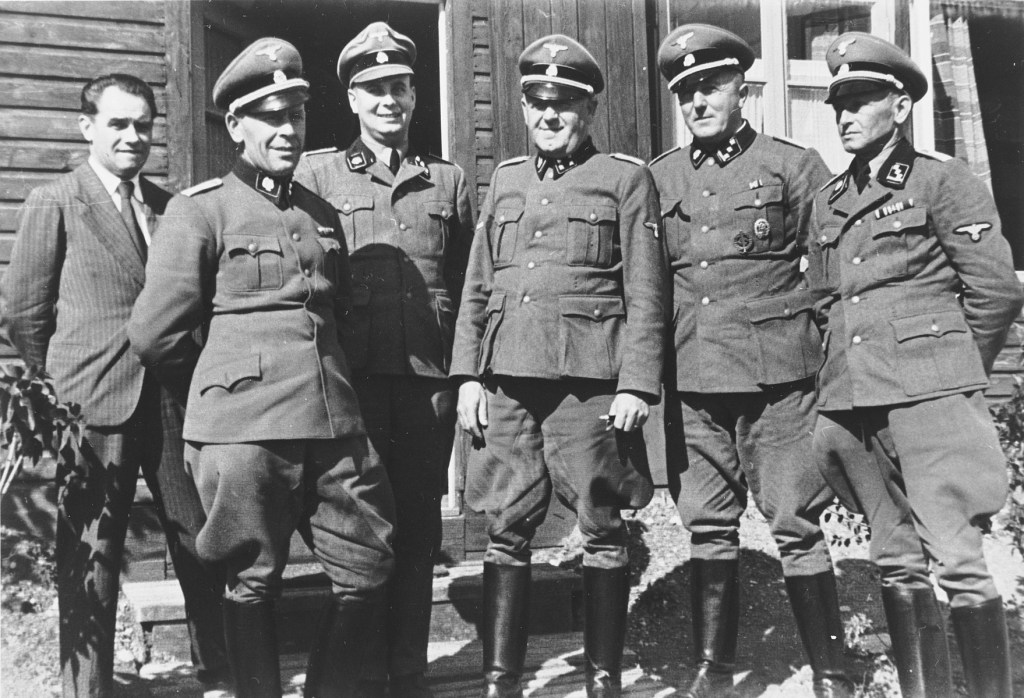
Photo Credit: The United States Holocaust Memorial Museum, curtesy of Robert A. Schmuhl
Description: Far right is Anton Ganz, second from right is Paul Sporrenberg (commander of the camp from 1942-1945) and center is Hermann Pister, the first commander of KZ Hinzert and later commander of Buchenwald from 1942-1945.
While the camp was designed to hold 560 people maximum, at times more than 1,200 people were forcibly held here. Violence, hunger, and grueling labor defined daily life in Hinzert. Imprisoned people were fed bread, coffee substitute, tea, and soup while working extremely long days in the nearby quarry and highway, exposed to the weather and other elements; their labor was also loaned out across the region to nearby companies (again, one of the great points made by Zone of Interest). They worked in mines, forestry, coal, and rubber.
One of the eyewitness accounts documented at the memorial stated:
“Companies, but also private individuals, turned directly to the “SS-Sonderlager Hinzert bie Hermeskeil,” as the postal address was called, and asked for the transfer of poisoners as cheap labor. It was mostly about wood transport, construction and earthworks, use in agriculture or in nurseries. In the surrounding communities such as Hinzert, Poleter, Rascheid;
AuBenkommando. SS Special Camp / Concentration Camp Hinzert Documentation Exhibit. Accessed: 7 March 2024.
Even within the camp, the prisoners had to do work on behalf of companies. For the company Romika, for example, rubber rings for plate mines were produced in the warehouse. Or the Hitler Youth… Hermeskeil asked in June 1942 whether the objects necessary for the repair of their sports field could by made by prisoners.
The prisoners also had to work in the camp in various workshops (tailors, shoemakers, carpenters, painters, etc.), in the laundry, in the clothing store, in the nursery, and also in the SS garage.”
Another account detailed the humiliation faced by imprisoned people at the hands of the guards — notoriously vicious toward those forcibly detained there — including acts of violence and humiliation. As noted by survivor Albert Kaiser, a union supporter from Luxembourg, they were forced to run naked in circles in front of (and to the amusement of) the local population; locals passed by the camp fence on the same road used today. This was further corroborated by Channell Islander Peter Hassall who stated: “all staring and seemingly pleased with the ‘show’ going on inside’”. Torture, neglect, and starvation were part of daily life at KZ Hinzert.
KZ Hinzert was not an extermination camp — the space was used primarily as a forced labor camp and transit holding for those sent to other camps across Germany and their occupied territories — but the SS did often murder those imprisoned here. While the total number is unknown (the recorded number is 321 killed due to lack of medical treatment, lethal injections, and torture), it was the site of the mass killing of a number of groups. Twenty-three people were murdered on 25 February 1944 as a warning to the Luxembourg resistance movement and seventy Soviet POWs were killed in 1941. Of those arrested during the Night and Fog decree, the French government estimates that at least 804 of their citizens were killed at KZ Hinzert.
After four years in operation, KZ Hinzert became part of the Buchenwald concentration camp system in November 1944. The camp remained opened — despite areas destroyed by an air raid — until March 1945 when survivors were either forced on a death march to Hessen or shipped to Buchenwald. Just two weeks later, the camp was discovered by the 94th Infantry Division, although very few people remained there at the time of liberation. Following 1945, the French government exhumed victims from mass graves located near the forest, returning their remains back to France and Luxembourg.
Memorial Today
The Memorial Site of the SS Special Camp / Concentration Camp Hinzert is near the German city of Trier. Very little of the camp remains standing today; the landscape of the surrounding area is peaceful and green, today dotted with slowly turning windmills. Easily accessible by car, the memorial offers a detailed map of sites related to the history of the concentration camp including locations of mass graves, the former quarry, and a number of related spaces.
Not included in the official map, but something to note, is the decommissioned Reinsfeld Bahnhof (train station). This station was the last stop for thousands of those deported to Hinzert; after exiting the train, they were forced to march the 3.25 km (two miles) from the station to the camp. The rail line was decommissioned in the 1980s and privately sold. Now an event space, an informational plaque was recently placed opposite the building, detailing the forced journeys of imprisoned people throughout Germany and its occupied countries.
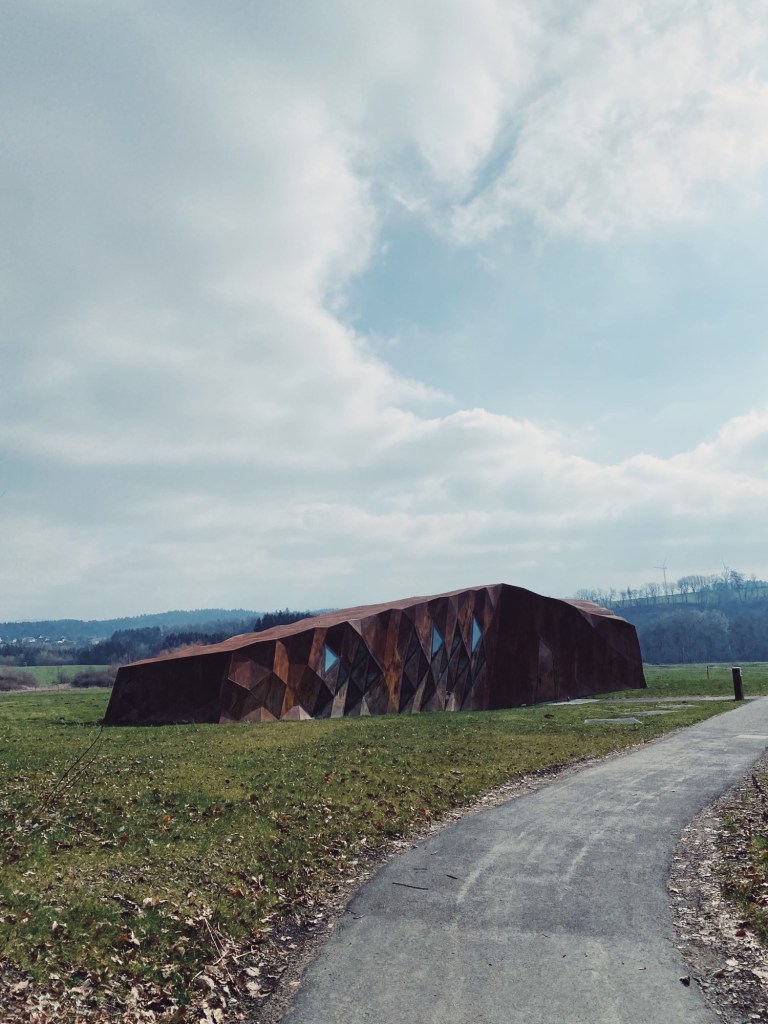
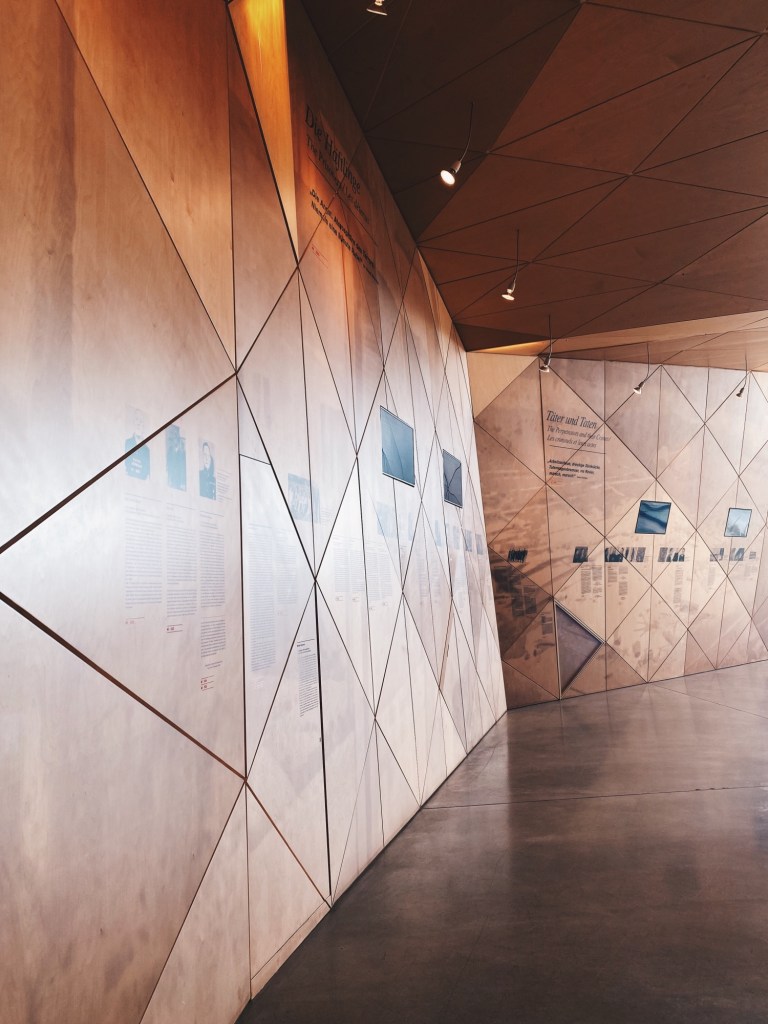
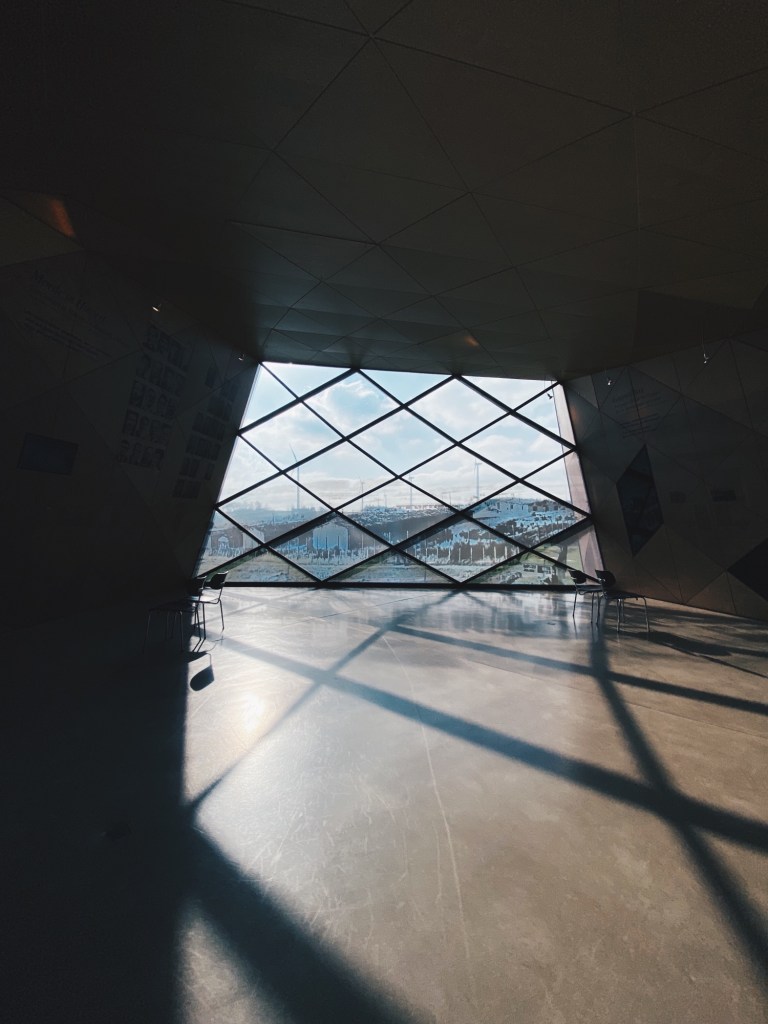
The intention behind the design of the Documentation and Meeting House was to:
“pursue the fundamental thoughts which portray the ambivalence of the present day idyll and the crimes of the past. They wanted to build a building ‘that reveals a fault of the countryside which deceives us of the idyll of this place’. With this building they wanted to set a ‘mark of an irritation.’ The exhibition to be integrated in this building was to be marked by the view to the grounds of the former prisoner’s camp.”
Landeszentrale Politische Bildung Rheinland-Pfalz. “The Memorial Site of the SS Special Camp / Concentration Camp Hinzert.” Blätter Zum Land (Number 71). 1-19.
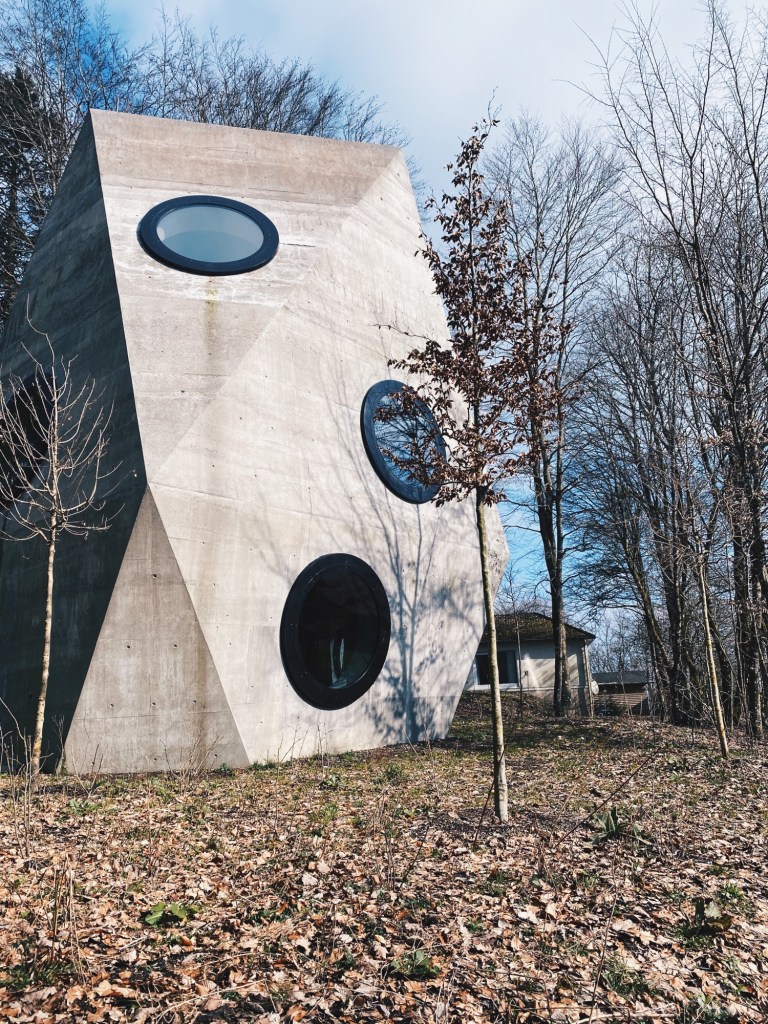
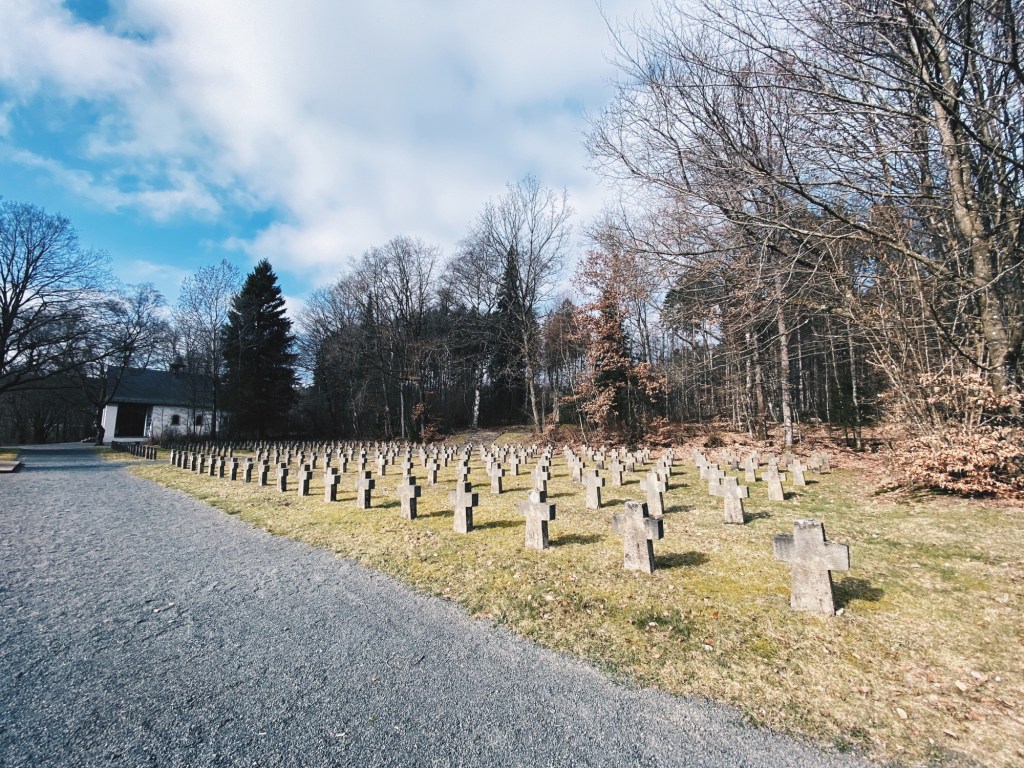
Established in 1946 by the French military, the Cemetery of Honor was previously occupied by the guard’s barracks. While many of the victims murdered here were returned to their countries, there are 217 people still buried here.
Up until the 1990s, the cemetery “had a shadowy existence… and actually covered up the background of the camp” (as stated on the memorial’s website). Memorialization in Germany takes a number of forms and over a long period of time; I wanted to note how recent the genuine efforts to formally memorialize the spaces in the former KZ Hinzert actually are.
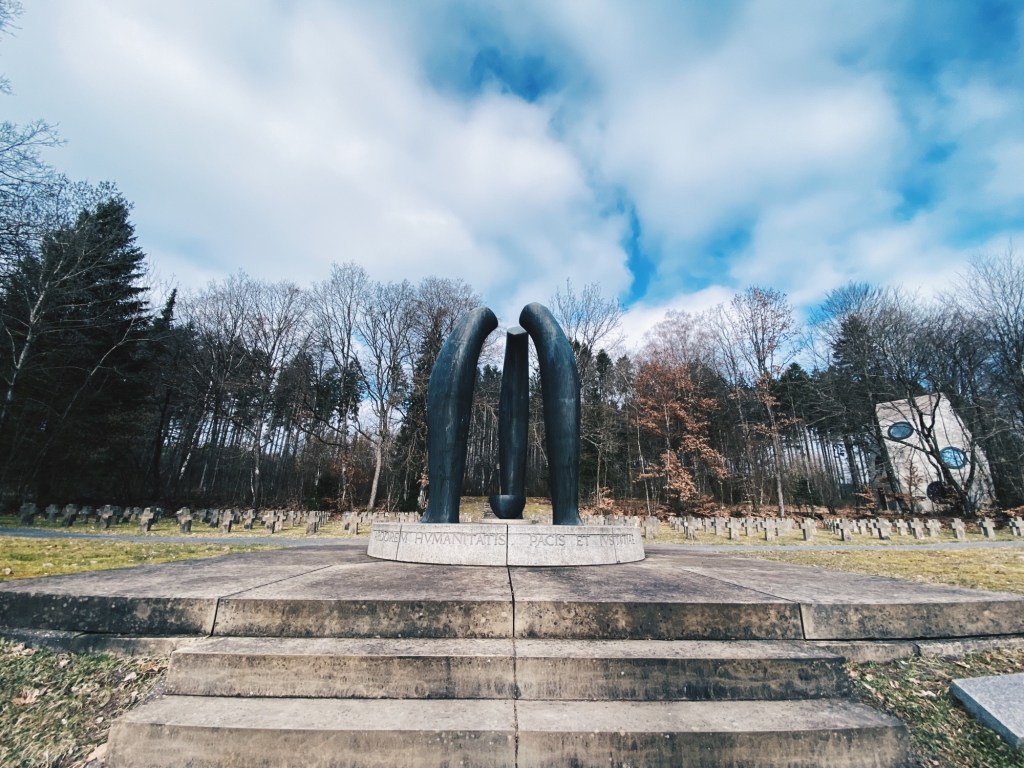
Wecollier was a Luxembourgish sculptor who rejected to join the Reich Chamber of Culture after Nazi Germany occupied Luxembourg. Instead, he joined a resistance organization (Letzeburg People’s Legion) and was arrested after refusing to join the mandatory conscription service. He was first deported to KZ Hinzert and then sent to Lublin, a camp in Poland, near today’s border with Ukraine.
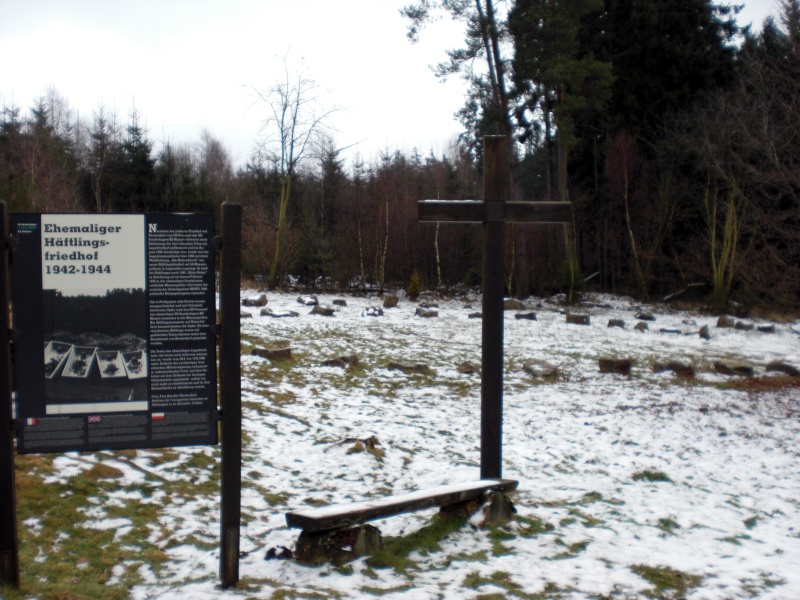
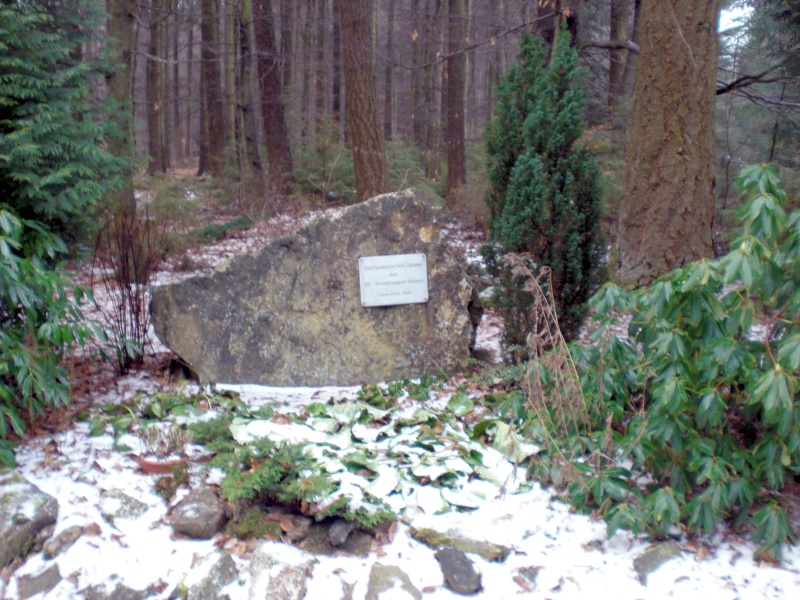
Youth groups from Hermeskeil Gymnasium (upper school) and Luxembourg helped design the landscape and confront the history of the space at the former prisoner’s cemetery and site of the murdered Soviet prisoners of war (1941). These efforts were led by Mr. Volker Schneider.
[ Just an update on the SS officers in the photo posing at Hinzert:
Ganz: After WWII, Ganz went into hiding in Austria, then returned to Germany in 1949, working in construction under his real name. He retired in 1965 and was arrested two years later, then released on bail. His trial started in 1972 and he was sentenced to life imprisonment for four murders (he worked both in Hinzert, Mauthausen, and Ebensee concentration camps) but was released due to medical reasons and died of cancer in 1973.
Sporrenberg: Sporrenberg went into hiding after the war ended and was considered missing until he was arrested in 1959. He was accused of causing the deaths of at least 60 people through mistreatment, murdering people in nine cases, and carrying out the execution of 23 Luxembourgers in 1944. He died before the trial started in 1961.
Pister: After KZ Hinzert, Pister became the commander of the Buchenwald concentration camp. In 1945, Pister was arrested by American troops near Munich and was tried before the American Military Tribunal at Dachau for violating the Laws and Usages of War of the Hague Convention of 1907. He was found guilty in 1947 and sentenced to death, but died in Landsberg Prison of an acute heart attack in September 1948. ]
“And I think that we have a moral and one could also argue, legal obligation to compare the Holocaust and the atrocities committed during the Second World War to the present. If we take the promise of never again, seriously, we once again have to constantly be asking ourselves, are we laying the foundations for the mass murder of millions of people? Are we employing or as part of the world employing the same kinds of tactics that were employed by the Nazis?”
Treisman, Rachel and Leila Fadel. 2023. “Despite Backlash, Masha Gessen Says Comparing Gaza to a Nazi-Era Ghetto is Necessary.” NPR News. Available here.
Currently:
Reading: The Survivors of the Clotilda: The Lost Stories of the Last Captives of the American Slave Trade (Hannah Durkin)
Watching: Loot Season 2 (Hulu)
Listening: Cowboy Carter (Beyoncé)
Sources:
Cole, Teju. 2019. “When the Camera Was the Weapon of Imperialism (and Still is).” The New York Times Magazine. Available here.
Frank Falla Archive. 2024. “Hinzert Concentration Camp.” Frank Falla Archive. Available here.
Koppermann, Ulrike. 2019. “Challenging the Perpetrators’ Narrative: A Critical Reading of the Photo Album ‘Resettlement of the Jews from Hungary.’” Journal of Perpetrator Research 2:2. 101-129. Available here.
Landeszentrale Politische Bildung Rheinland-Pfalz. “The Memorial Site of the SS Special Camp / Concentration Camp Hinzert.” Blätter Zum Land (Number 71). 1-19.
Megargee, Geoffrey P. 2009. “Hinzert Concentration Camp.” The United States Holocaust Memorial Museum Encyclopedia of Camps and Ghettos, 1933-1945, Volume I: Early Camps, Youth Camps, and Concentration Camps and Subcamps under the SS-Business Administration. Available here.
Rosenthal, Nora. 2024. “What We Don’t Talk About When We Talk about The Zone of Interest.” Cult MTL. Available here.
Treisman, Rachel and Leila Fadel. 2023. “Despite Backlash, Masha Gessen Says Comparing Gaza to a Nazi-Era Ghetto is Necessary.” NPR News. Available here.


 middleworldadventures.com
Leave a comment